

Contest Every Race: Why Uncontested Seats Are a Crisis for Leadership
- Pipeline Leadership
- Mar 5
- 12 min read

You stand in the voting booth, pen poised, only to find a hollow silence where there should be a choice. It is a quiet crisis of democracy: the uncontested seat. When we fail to contest every race, we do not just lose a candidate; we lose the vital tension that drives innovation, accountability, and progress within our local ecosystems. Leadership is not a title reserved for the elite or the "perfectly" qualified. It is a call to service that begins with the courage to show up. If you have felt the frustration of a limited ballot or the fear that you are somehow not enough to fill the gap, know that these vacancies are not a reflection of your inadequacy, but a summons to your potential.
In this article, we explore the strategic importance of down-ballot races and how they function as the essential pipeline for our future. You will discover a structured path to transition from a concerned citizen to a prepared candidate, trading the weight of isolation for the quiet confidence of leading from the heart. Together, we will examine how to build a legacy of participation that ensures no community goes unheard. It is time to bridge the gap between your desire for change and the intentionality required to lead it.
Key Takeaways
Understand the "Ghost Seat" crisis and why leaving local offices unchallenged erodes the foundation of our collective leadership ecosystem.
Learn how the strategic decision to contest every race creates a "Reverse Coattail" effect that drives engagement from the bottom of the ballot upward.
Discover the vital difference between being a "warm body" candidate and a prepared leader who operates with intentionality and deep self-awareness.
Master a practical framework for auditing your local ballot to identify uncontested opportunities where your leadership can create a lasting legacy.
Explore how modern tools like the AI Reflection Coach can help you sharpen your message and bridge the gap between technical strategy and soulful service.
Table of Contents What Does It Mean to Contest Every Race? The Strategic Impact of Down-Ballot Competition Beyond the Ballot: Why Candidates Need a Leadership Pipeline How to Identify and Prepare for Your Local Race Building the Next Generation of Public Leaders with Pipeline Leadership
What Does It Mean to Contest Every Race?
At its core, the mandate to contest every race is a commitment to the integrity of our democratic ecosystem. It is the refusal to let silence govern. When we speak of contesting every race, we are advocating for a system where no public office-no matter how small the jurisdiction-goes unchallenged. This is about more than partisan victory; it is about the restoration of community intentionality. Leadership is not a title; it is a continuous presence.
We currently face a "Ghost Seat" epidemic. Every year, thousands of local roles are filled by default because only one name appears on the ballot. An uncontested election signals a breakdown in the leadership pipeline, suggesting that the community has either disengaged or that the path to service has become too opaque to navigate. By ensuring every seat is challenged, we shift from a model of passive recruitment to a holistic leadership strategy that values every voice and every zip code.
The Crisis of the Uncontested Ballot
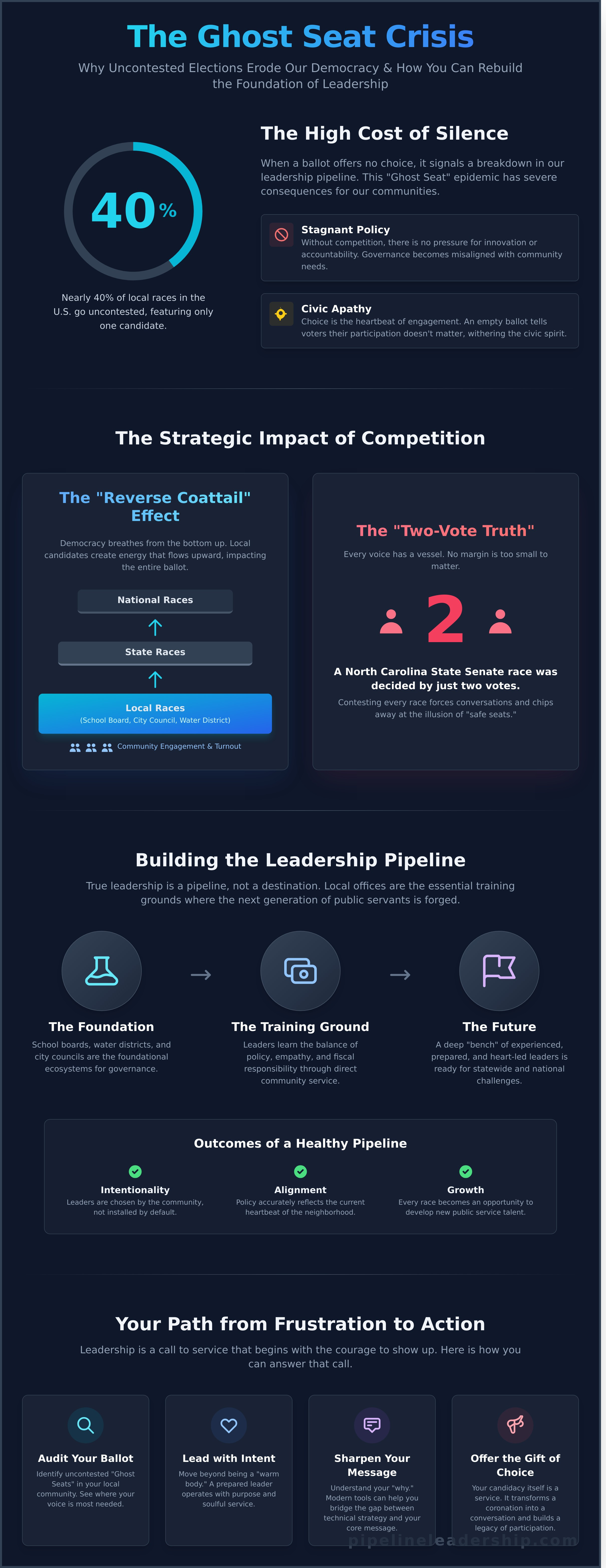
The statistics are sobering. In many election cycles across the United States, nearly 40% of local races-from school boards to water districts-feature only one candidate. This lack of competition leads to stagnant policy and a profound misalignment between a community’s needs and its governance. When voters are met with a ballot that offers no choice, the psychological impact is immediate: it breeds apathy. Choice is the heartbeat of engagement; without it, the civic spirit begins to wither.
Contesting as an Act of Leadership
To contest every race is to view candidacy as a form of sacred community service. It is the embodiment of "leading from the heart." Even when the odds of winning are slim, the presence of a challenger forces a dialogue, demands accountability, and changes the narrative of a town. It transforms a coronation into a conversation. When a leader steps forward to run, they are not just seeking a seat; they are offering their community the gift of an alternative future. This is how we build a legacy of active participation rather than historical inertia.
Intentionality: Moving from accidental winners to chosen leaders.
Alignment: Ensuring policy reflects the current heartbeat of the neighborhood.
Pipeline Growth: Using every race as an opportunity to develop new talent for the future.
The Strategic Impact of Down-Ballot Competition
Democracy does not begin at the top; it breathes from the bottom up. When we choose to contest every race, we are not just filling a ballot-we are activating an entire community. This is the "Reverse Coattail" effect in action. While national figures often dominate the headlines, it is the local candidate-the neighbor, the teacher, the small business owner-who builds the trust necessary to bring voters to the polls. Their presence on the ballot creates a surge of energy that flows upward, impacting every level of government. Leadership is a practice of presence.
Accountability is the bedrock of a healthy society. When a seat goes uncontested, we lose the opportunity for dialogue, growth, and oversight. Research from the Brookings Institution highlights the profound impact of down-ballot races on the health of our democratic institutions. By ensuring every position is challenged, we build a culture where public service is earned through merit and connection, rather than inherited through complacency.
Every Vote, Every Margin
Margins matter. In a notable North Carolina State Senate race, the entire outcome was decided by a mere two votes. This "Two-Vote Truth" serves as a stark reminder: there is no such thing as an insignificant margin. "Safe seats" are often an illusion maintained by a lack of competition. When we contest every race, we force a conversation that wouldn't otherwise happen, chipping away at apathy and ensuring that every constituent's voice has a vessel. The Pipeline serves as the infrastructure for this persistence, identifying and supporting leaders who are willing to stand in the gap, regardless of the perceived odds.
The Ecosystem of Local Governance
True leadership is a pipeline, not a destination. School boards, water districts, and city councils are the foundational ecosystems where the next generation of statewide leaders is forged. These offices are the primary training grounds for governance, where leaders learn the delicate balance of policy, empathy, and fiscal responsibility. This is where the "bench" is built.
Skill Development: Local officials manage immediate budgets and navigate complex community needs.
Legacy Building: Decisions made today at the school board level shape the community for decades.
Bench Strength: A contested local race today creates a seasoned, battle-tested candidate for tomorrow.
Contesting these races isn't just about winning a seat today; it’s about investing in the leadership legacy of the future. We lead from the heart by showing up where it matters most: at home.
Beyond the Ballot: Why Candidates Need a Leadership Pipeline
To contest every race is a noble strategic goal, but filling a ballot line is only the first step in a much larger journey. Leadership is not a title. It is an intentional practice of service that requires more than just a willing name; it requires a prepared mind and a resilient heart. When we focus solely on recruitment without a commitment to development, we risk candidate burnout and, ultimately, ineffective governance. True power is built when we move beyond the "warm body" approach toward a robust leadership ecosystem.
The consequences of neglect are clear. As highlighted in The Strategic Impact of Down-Ballot Competition, the absence of prepared candidates in local races creates a vacuum that stifles progress. However, simply placing a person in that vacuum is not enough. We must ensure that those who step forward are equipped to handle the weight of the office they seek.
The 'Warm Body' Trap vs. The Prepared Leader
A "warm body" candidate is often a placeholder, left to navigate the complexities of a campaign in isolation. This lack of support leads to the "fear of the unknown," which can paralyze even the most well-intentioned citizens. In contrast, a prepared leader operates with a sense of grounded inspiration. They understand that their personal values must align with their public service to ensure long-term legacy over short-term wins. Our public office readiness tools bridge this gap, providing the structured preparation necessary to transform a daunting challenge into a clear, actionable roadmap.
Intentionality: Moving from accidental candidacy to strategic leadership.
Support Systems: Replacing isolation with a community of mentors and resources.
Sustainability: Preventing burnout by setting realistic expectations and boundaries.
Developing the Emotional Intelligence for Public Office
The transition from a private citizen to a public figure requires a profound shift in emotional intelligence. Vulnerability and connection are no longer just personal traits; they are essential tools for building trust in a cynical age. We believe in moving from "title-seeking" to "purpose-driven" leadership. This requires deep reflection and a willingness to be human in the public eye.
To facilitate this growth, we advocate for the use of an "AI Reflection Coach" to help candidates process their experiences and refine their vision. This digital partnership allows for a safe space to explore personal growth, ensuring that when a leader speaks, they are leading from the heart. By fostering this alignment between the individual and the office, we create a pipeline of leaders who are not just ready to run, but ready to serve.
How to Identify and Prepare for Your Local Race
To contest every race is more than a political strategy; it is a vital commitment to the health of our local democratic ecosystems. True leadership begins with a clear-eyed assessment of where your community’s needs intersect with your unique capabilities. Before you step onto the stage, you must understand the landscape you intend to serve through a disciplined, five-step process.
Audit the Ballot: Identify "ghost" seats-those uncontested positions where democracy has fallen silent.
Analyze Your Pipeline: Conduct a rigorous inventory of your current professional skills and the growth areas required for public service.
Engage a Guide: Partner with a leadership coach to navigate the psychological weight and vulnerability of public exposure.
Leverage Technology: Utilize digital networking tools to map your community’s influence and build a strategy rooted in connection.
Commit to Readiness: Follow a structured curriculum of governance and ethics before you officially file your paperwork.
Finding the Right Fit for Your Leadership
Alignment is the foundation of effective service. Research the specific duties of various types of elected office to ensure your background matches the role’s demands. For instance, a finance professional may find their highest purpose on a school board, while a project manager might thrive on a planning commission. This choice requires deep intentionality; you are not just seeking a title, but a platform for lasting impact. Consider the time commitment as a sacred investment in your community’s legacy.
The Roadmap to Readiness
Preparation is a quiet, steady discipline. We recommend a 12-month roadmap that prioritizes "public office readiness"-the ability to lead effectively once seated-over mere campaign management. Focus on understanding policy, building emotional resilience, and fostering genuine connection within your district. The Candidate Pipeline is a continuous flow of prepared talent, ensuring that when the moment calls, the leader is already forged. By choosing to contest every race with this level of preparation, you transform a campaign into a catalyst for systemic change.
Are you prepared to lead from the heart? Explore how Pipeline Leadership can guide your journey from citizen to public servant.
Building the Next Generation of Public Leaders with Pipeline Leadership
The strategic imperative to contest every race is more than a tactical shift; it is a cultural necessity. At Pipeline Leadership, we transform this philosophy into a tangible reality by cultivating a robust ecosystem of civic talent. We believe that for democracy to thrive, the pipeline must be filled with individuals who lead from the heart, grounded in intentionality and a commitment to their communities. It is about moving from a reactive stance to a proactive strategy of leadership development that values the human spirit as much as the political outcome.
The Power of Human and AI Connection
Our digital learning platform provides curated lessons designed for everyday people, effectively bridging the gap between raw potential and executive presence. To sharpen your political message, our AI Reflection Coach offers a unique space for deep self-awareness, allowing you to refine your "why" with precision and clarity. However, technology is only the scaffolding. We pair these digital tools with one-on-one sessions with professional leadership coaches who prioritize the human spirit. This duality-the marriage of strategic systems with soulful leadership-ensures your development is both professionally rigorous and profoundly personal.
Curated Lessons: Accessible modules that translate complex leadership theories into actionable community strategies.
AI-Driven Insights: Real-time feedback to help you find your authentic voice and sharpen your public narrative.
Human-Centric Coaching: Personalized guidance to navigate the emotional weight of public service.
Your First Step Toward the Ballot
Leadership is not a title; it is a choice to serve. You do not need a storied political background or a silver-tongued resume to start your journey today. By choosing to contest every race, you leave a legacy of courage that transcends the final vote count. Through our strategic organizational partnerships, we build a sustainable candidate pipeline that supports you at every turn, ensuring that no leader has to walk the path alone. This is your invitation to join a community of leaders who understand that true impact requires both the courage to stand and the tools to lead with integrity.
Take the first step toward a more meaningful legacy. Explore our Political Leadership Development Platform and discover the power of leading from the heart.
The Legacy of an Answered Call
An empty ballot is more than a missed opportunity; it is a fracture in the foundation of our collective future. When we fail to contest every race, we surrender the chance to shape the ecosystems where our communities live, work, and grow. Leadership is not a title bestowed by default; it is a journey of intentionality rooted in the courage to show up. By cultivating a pipeline of prepared, heart-led individuals, we move beyond the stagnation of uncontested seats toward a culture of vibrant, accountable service.
True transformation requires both the right strategy and a soulful commitment to growth. Pipeline Leadership provides the architecture for this evolution through our AI-powered Reflection Coach for personalized growth, live one-on-one leadership coaching sessions, and curated modules designed for everyday people. We help you bridge the gap between your current potential and your ultimate legacy. The path to public office is rarely walked alone; it is forged through partnership and the quiet confidence of proven wisdom. Your community is waiting for the leader you are becoming.
Join the Pipeline: Start Preparing for Public Office Today
Frequently Asked Questions
Is the 'Contest Every Race' movement only for Democrats or Republicans?
While the specific organization "Contest Every Race" focuses on Democratic recruitment, the broader philosophy is a non-partisan imperative for a healthy democracy. Every community deserves a choice. By ensuring no seat goes unchallenged, we strengthen the democratic pipeline, fostering a culture of accountability and intentionality that transcends party lines. This commitment to contest every race prioritizes the collective health of our local ecosystem and ensures every voice is heard.
How much does it cost to run for a local office?
Financial requirements vary significantly based on the scale and reach of the office. A local school board or water district seat may only require a few hundred dollars for filing fees and grassroots materials. Conversely, a city council race in a larger municipality might demand $5,000 to $20,000. Leadership is a strategic investment in your community’s legacy, requiring careful alignment of resources to ensure your message resonates effectively.
Can I run for office if I have a full-time job?
Absolutely. Most local positions are specifically designed for "citizen-leaders" who maintain professional careers. Success in this dual role requires rigorous time management and a supportive personal ecosystem. Running while employed demonstrates a unique brand of empathy-you understand the daily struggles of your constituents because you share them. Leadership is not a title; it is the courage to serve and lead from the heart amidst a busy life.
What happens if I contest a race and I lose?
There is no such thing as a wasted effort when you choose to contest every race. Even in defeat, you have shifted the local narrative, forced the incumbent to defend their record, and built a pipeline of supporters for future cycles. The vulnerability of the arena is where true growth occurs, leaving a lasting legacy of courage that inspires others to step forward and engage with their community.
Do I need a law degree or a political science background to run?
No. Our governing bodies do not need more specialized resumes; they need more human-centric heart. While legal knowledge is helpful, it is secondary to lived experience and emotional intelligence. Whether you are a nurse, a parent, or a tradesperson, your unique perspective is essential for a balanced community ecosystem. Authentic leadership is rooted in connection and the willingness to grow, not just academic credentials or political backgrounds.
How can I find out which seats in my area are currently uncontested?
Begin your search at your County Clerk’s office or the local Board of Elections website. They maintain public records of candidate filings and historical election data that reveal which seats often go unchallenged. Identifying these "ghost seats" allows you to see where the leadership pipeline has run dry. This data-driven approach ensures your entry into public service is both strategic and profoundly impactful for your local community.
What is the difference between a campaign manager and a leadership coach?
A campaign manager is your tactical architect, focusing on voter data, fundraising, and logistical execution. Conversely, a leadership coach is your steady mentor, focusing on your internal alignment and emotional resilience. While the campaign manager handles the mechanics of the race, the leadership coach ensures you are prepared to lead with intentionality, bridging the gap between simply winning a seat and actually serving the public good.
How does the AI Reflection Coach help me prepare for public office?
The AI Reflection Coach serves as a sophisticated partner in your development, using intentional inquiry to help you navigate the complexities of public life. By mirroring your thoughts and values, it fosters the deep introspection required for modern leadership. This tool ensures your platform is not just a list of policies, but a grounded expression of your purpose, helping you articulate a vision that resonates with professional rigor and soulful connection.


Comments